
Trezor®® Hardware Wallet: Protect Your Crypto
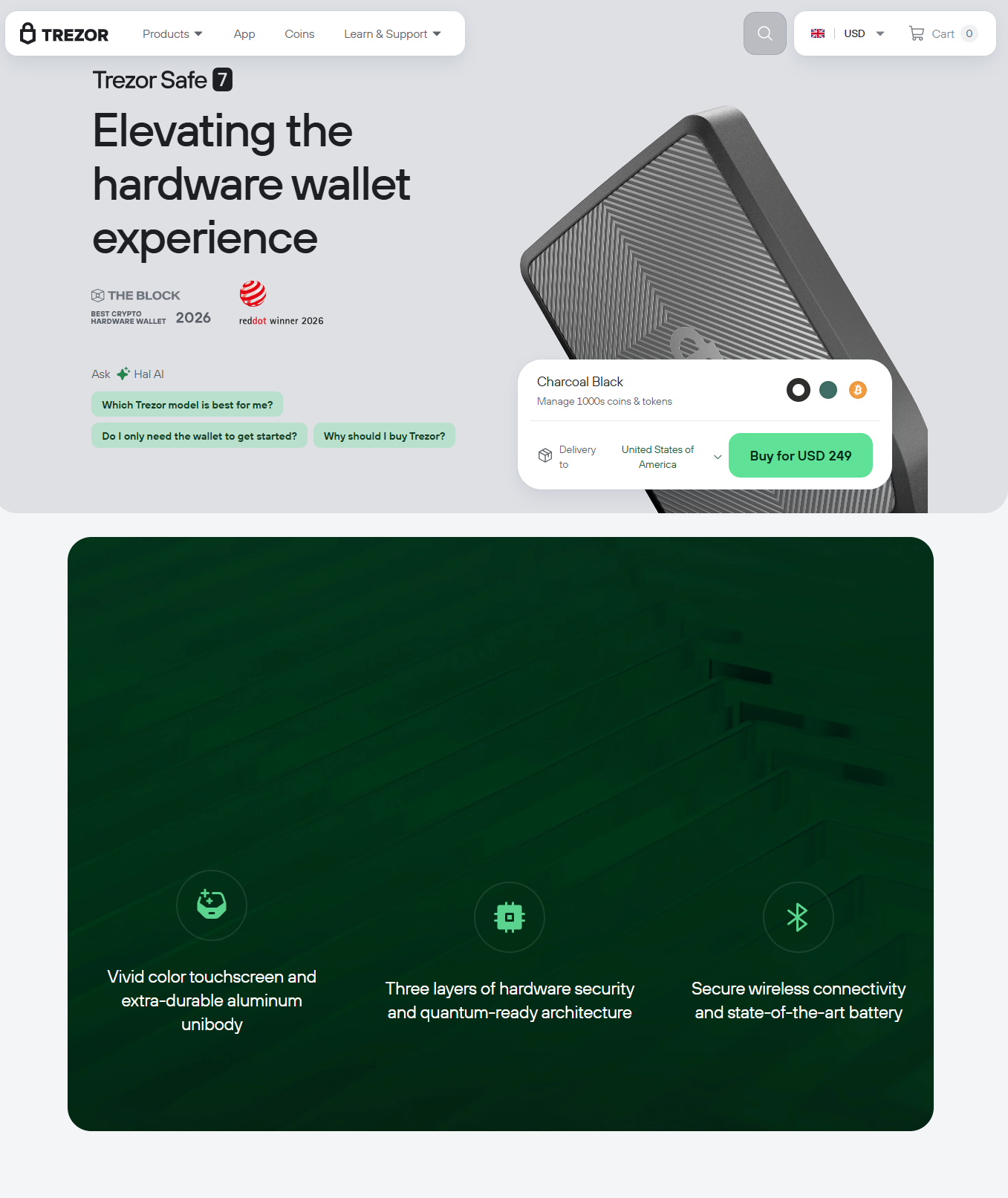
A Trezor Hardware Wallet is a physical device designed to keep cryptocurrency private keys protected from many online threats. Unlike software wallets that keep key-related data on internet-connected devices, a hardware wallet provides an additional layer of isolation and lets users confirm transactions directly on the device.
For crypto investors who value self-custody, a Trezor Wallet can be a practical option for managing digital assets while maintaining greater control over private keys.
What Is a Trezor Hardware Wallet?
Trezor is a hardware wallet brand developed for secure cryptocurrency storage and management. Its devices work with the Trezor Suite application, allowing users to send, receive, trade, stake, and monitor supported digital assets.
Current Trezor Safe devices combine features such as on-device transaction confirmation, PIN and passphrase protection, open-source design, and Secure Element technology. For example, the Trezor Safe 3 includes an EAL6+ certified Secure Element and supports thousands of coins and tokens through Trezor Suite.
For more information, visit the official Trezor website.
Key Features of Trezor Wallet
A Trezor crypto wallet focuses on combining security with straightforward asset management. Important features include:
- Offline key protection: Private keys are kept away from many internet-based attacks.
- On-device confirmation: Users can verify transaction details on the physical wallet before approving them.
- PIN and passphrase security: Additional authentication options help protect access to the device.
- Open-source approach: Trezor emphasizes transparency in its wallet design and security development.
- Wide asset support: Trezor Safe 3 supports thousands of coins and tokens through Trezor Suite.
- Backup and recovery: Wallet backups can help restore access if a device is lost, damaged, or reset.
These features make a Trezor hardware wallet particularly appealing to users who want more control over their cryptocurrency security.
How Does a Trezor Hardware Wallet Work?
After setting up the device, users create a wallet backup and protect it offline. Transactions can then be prepared through compatible software and confirmed on the Trezor device itself.
The wallet backup is especially important. Depending on the device and setup, Trezor uses 12-, 20-, or 24-word backup formats. These words can restore access to the associated wallet if the hardware device becomes unavailable.
Users should never share their wallet backup or store it digitally. Trezor specifically advises against keeping screenshots, photographs, emails, or cloud copies of the backup.
Why Choose a Trezor Crypto Wallet?
A Trezor Hardware Wallet may be suitable for investors who hold cryptocurrency for the long term and want to reduce reliance on exchanges or online-only wallets.
It can be especially useful for:
- Long-term cryptocurrency holders
- Bitcoin and altcoin investors
- Users interested in self-custody
- People seeking offline private-key protection
- Crypto users who want transaction confirmation on a dedicated device
However, hardware wallets are not completely risk-free. Users still need to protect their wallet backup, avoid phishing websites, verify addresses carefully, and purchase devices through trustworthy channels.
Trezor Wallet Backup: An Essential Security Step
Your wallet backup is arguably the most important part of using a Trezor device. It provides the information required to recover the wallet if the physical device is lost or damaged.
For better protection:
- Write the backup words down exactly as displayed.
- Keep them offline.
- Store them somewhere protected from theft, fire, and water.
- Never photograph or upload them.
- Never enter them into a website, app, or computer unless the Trezor device itself specifically instructs you to do so.
Trezor also provides guidance on wallet backup protection and recovery practices.
Is Trezor Hardware Wallet Right for You?
If cryptocurrency security and self-custody are priorities, a Trezor wallet can provide a strong combination of hardware-based protection and convenient asset management.
Before choosing a model, compare supported assets, display type, connectivity, backup options, and your preferred security features. You should also keep your device firmware and companion software updated through official sources.
Frequently Asked Questions
Is Trezor a cold wallet?
Yes. A Trezor hardware wallet is generally considered a form of cold storage because private keys are protected on a dedicated device rather than being continuously exposed to an internet-connected computer.
What happens if I lose my Trezor?
Losing the physical device does not necessarily mean losing access to your cryptocurrency. If you have securely preserved your wallet backup, you can use it to recover access on a compatible replacement device.
Can Trezor be hacked?
No security solution is completely immune to every threat. Trezor reduces exposure to many remote attacks through hardware-based key protection, but users must still protect their PIN, wallet backup, device, and transaction information.
Where should I buy a Trezor?
For maximum confidence, purchase from Trezor's official website or an authorized source. Always verify the authenticity of the device and follow the manufacturer's setup instructions.
Is a Trezor wallet worth it?
For users holding meaningful amounts of cryptocurrency, the additional security and self-custody features of a hardware wallet may make Trezor worth considering.
Updated about 2 hours ago